- Details
- By Brian Edwards
- Finance
LAS VEGAS — One of the most practical impacts of new federal tax rules is showing up at the powwow.
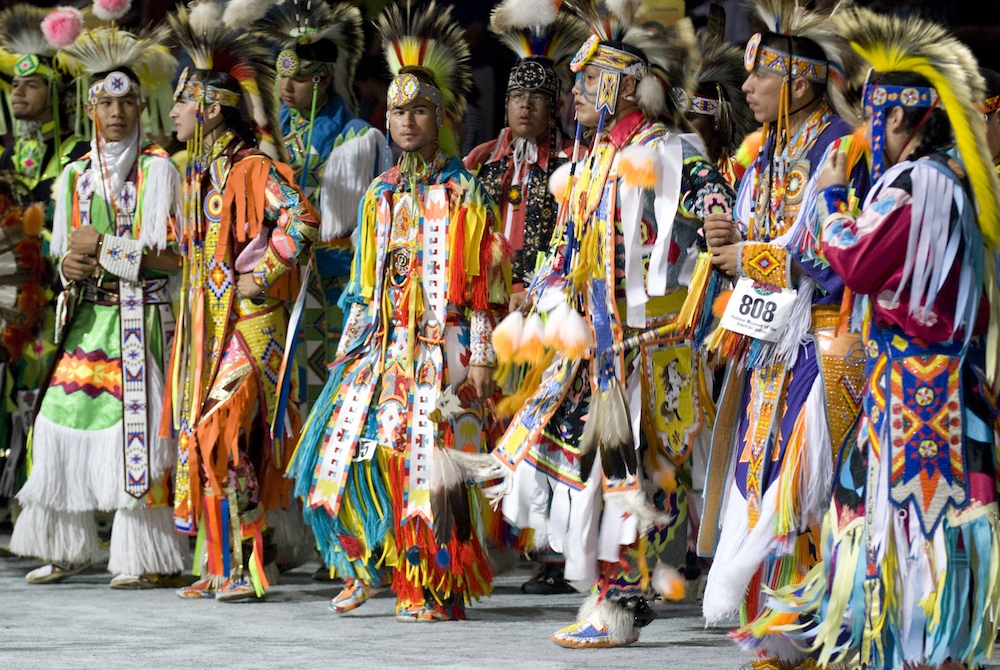
At the Reservation Economic Summit in Las Vegas this week, Treasury officials delivered a clear directive during a panel: if tribes are issuing 1099 tax forms to powwow prize winners, they should stop.
“Please do not issue your tribal members a 1099,” said Fatima Abbas, director of the Treasury's Office of Tribal and Native Affairs, pointing specifically to powwow prizes as a common example. “General welfare is not work.”
That guidance stems from regulations finalized in December implementing the Tribal General Welfare Exclusion Act — a framework that defers to tribes.
Under those rules, support provided by tribes as general welfare is not taxable income — with tribes determining what qualifies. That extends well beyond powwows to housing assistance, education support and emergency aid that tribes often provide to their citizens.
For years, tribes operated under uncertainty. Even after Congress clarified the law in 2014, the lack of regulations left room for IRS audits and inconsistent treatment. Tribal finance offices often decided to err on the side of caution.
Powwow prizes became collateral damage. Dancers and drum groups travel at their own expense. Prize money is part recognition, part support and all culture.
But without clear rules, tribes often treated those payments as taxable income. Once a 1099 is issued, it flows into federal systems. As Abbas warned, that’s where problems start — pulling payments into a system they were never meant to enter.
The new regulations cut through that. Treasury explicitly recognizes that payments tied to cultural and ceremonial activities — including powwow prizes — can qualify as general welfare. But that treatment is not automatic. Programs have to be set up as general welfare — not income.
The main shift in all of this is who decides. The rules require the IRS to defer to tribal governments on what qualifies as cultural activity, what serves general welfare and who should be eligible — reversing decades of federal second-guessing.
“We wanted to break off that chain of interfering with tribal internal decision-making,” Abbas said.
The regulations remove the need requirement. They allow uniform payments without triggering tax concerns and expand eligibility beyond enrolled members to broader family structures recognized under tribal law.
They also draw a clearer line between general welfare and per capita distributions, which remain taxable.
General welfare programs do not require IRS approval and are not tied to the source of funds. Tribes can use gaming revenue, federal funding or other income streams — and the IRS must defer to how those programs are classified. That shift reduces audit risk and administrative burden.
For decades, the IRS relied on case-by-case interpretations and informal tests. The result was friction — audits, delays and inconsistent outcomes.
The new rules limit that discretion. The IRS is no longer the primary decision-maker on what counts as general welfare. The tribe is. The powwow example is specific, but the implications are broader.
The regulations do not eliminate all questions. Issues such as Social Security eligibility and partially owned tribal enterprises remain unresolved.
But on general welfare, the direction is clear. Tribes can design programs under their own laws, define eligible participants and provide support without automatically triggering federal income tax.
In practice, that starts with small decisions, like whether to issue a tax form at the end of a powwow.
In this case, Treasury's answer is straightforward: don’t.