- Details
- By Chez Oxendine
- Gaming
A long-running fight over a proposed off-reservation casino in the Central Valley reached a decisive point this month after the California Supreme Court declined to review a lower court ruling that blocks the North Fork Rancheria of Mono Indians’ project without a valid state approval.
The decision leaves in place a 2025 ruling by California’s Fifth District Court of Appeal that the project cannot proceed without a valid gubernatorial concurrence — a requirement under federal gaming law for casinos on newly acquired trust land.
That concurrence, issued in 2012 by then-Gov. Jerry Brown, was effectively nullified when California voters rejected Proposition 48 in 2014. The referendum overturned the Legislature’s ratification of the tribe’s gaming compact and, according to the appellate court, also extinguished the Governor’s concurrence tied to the project.
The ruling leaves the project without a required state approval and prevents it from moving forward under California law.
The Picayune Rancheria of Chukchansi Indians, which operates the nearby Chukchansi Gold Resort and Casino, filed the underlying lawsuit in 2016. The tribe argued that the statewide vote invalidated the concurrence required under federal law for gaming on newly acquired trust land. A Madera County Superior Court judge agreed in 2024, granting summary judgment in Picayune’s favor. The Fifth District affirmed that ruling last year.
“This outcome reinforces a simple principle: the will of California voters matters,” Deann Kamalani, chairperson of the Picayune Rancheria of Chukchansi Indians, said in a statement provided to Tribal Business News. “This project was rejected at the ballot box, and the courts have now made clear that the outcome cannot be ignored or worked around.”
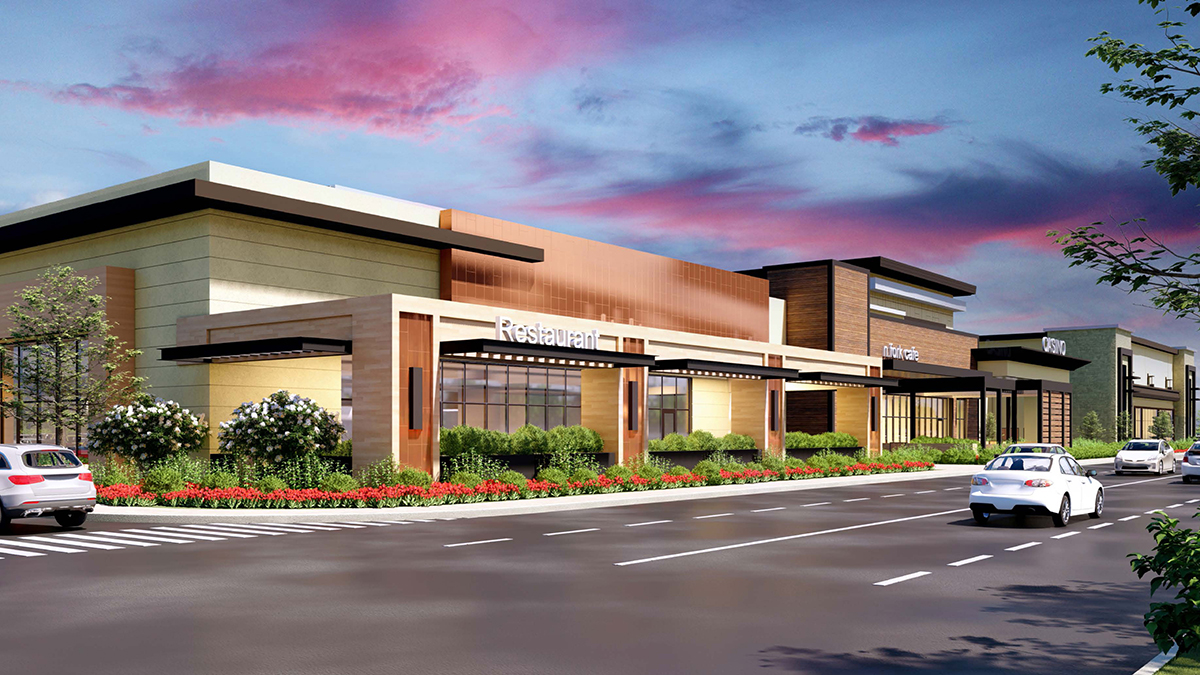
The North Fork Rancheria has pursued the Madera casino for more than a decade. The project centers on a 305-acre parcel along Highway 99, roughly 25 miles northwest of Fresno. Federal officials approved the land for gaming in 2012 after issuing a two-part determination under the Indian Gaming Regulatory Act.
That process requires the U.S. Department of the Interior to find that a project is in the tribe’s best interest and not detrimental to the surrounding community, along with concurrence from the governor.
Federal approvals for the trust acquisition and gaming procedures have survived multiple legal challenges. Federal courts upheld the Interior Department’s actions in decisions that are now final. North Fork has pointed to those rulings in public statements, arguing that federal law ultimately governs its ability to operate a casino on the Madera site.
“The North Fork Rancheria’s right to game on its federal trust land near Madera … is governed exclusively by federal law,” the tribe said in a statement obtained by Casino.org. “Federal approvals of the North Fork project occurred in 2012 and 2016, and the federal courts have since upheld each approval in final, non-appealable decisions.”
The state appellate court took a different view, focusing on California law rather than federal approvals. The panel concluded that the Governor’s concurrence was subject to referendum because it was tied to the compact ratified by the Legislature. When voters rejected Proposition 48, the court said, they also nullified the concurrence “from the outset,” leaving the project without a required state approval.
The California Supreme Court’s refusal to take up the case means that interpretation now stands and effectively ends the dispute in state courts.
Gaming on land acquired after 1988 is generally prohibited unless a tribe meets IGRA’s narrow exceptions, including the two-part determination and gubernatorial concurrence. Without that concurrence, the appellate court said, the North Fork project cannot proceed under state law.
The dispute has shaped California’s broader debate over off-reservation gaming, where tribes, developers and competing operators have challenged new projects that could shift regional gaming.
The Fifth District’s ruling relied heavily on earlier decisions, including the California Supreme Court’s 2020 opinion in United Auburn Indian Community v. Newsom, which recognized the Governor’s implied authority to concur in federal gaming determinations, and the 2021 Stand Up for California! decision, which held that voters retained the power to overturn such actions through referendum.
North Fork has continued to emphasize its federal approvals and has previously signaled plans to move forward with construction. The tribe partnered with Red Rock Resorts’ Station Casinos on a project estimated at roughly $400 million, including about 2,000 slot machines and 40 table games. Per the Casino.org story, site preparation began in late 2024.
The Supreme Court’s decision does not affect the federal trust status of the land, but it does leave the project without a valid state concurrence. Whether additional litigation emerges over the interplay between state and federal authority remains unclear.
For now, the appellate ruling stands as the final word in California courts, and the Picayune Rancheria says it intends to ensure that the state’s requirements for off-reservation gaming are upheld.
“This has been a long process, but it has always been about respecting the law and the voice of the people,” Kamalani said. “This decision provides long-overdue clarity for our region and for tribes across California. We remain committed to protecting our community, our region, and the integrity of tribal gaming in California.”