


- Details
- By Brian Edwards and Chez Oxendine
- Native Contracting
A central pillar of tribal federal contracting — the second biggest economic driver in Indian Country — has come under fresh scrutiny in Washington. Sen. Joni Ernst (R-Iowa), who is calling for a pause on Small Business Administration 8(a) set-asides, has cited several tribal and Alaska Native enterprises in letters to federal agencies. But those companies say her allegations rely on incomplete or incorrect information, setting up a sharp dispute over how the program is being portrayed.
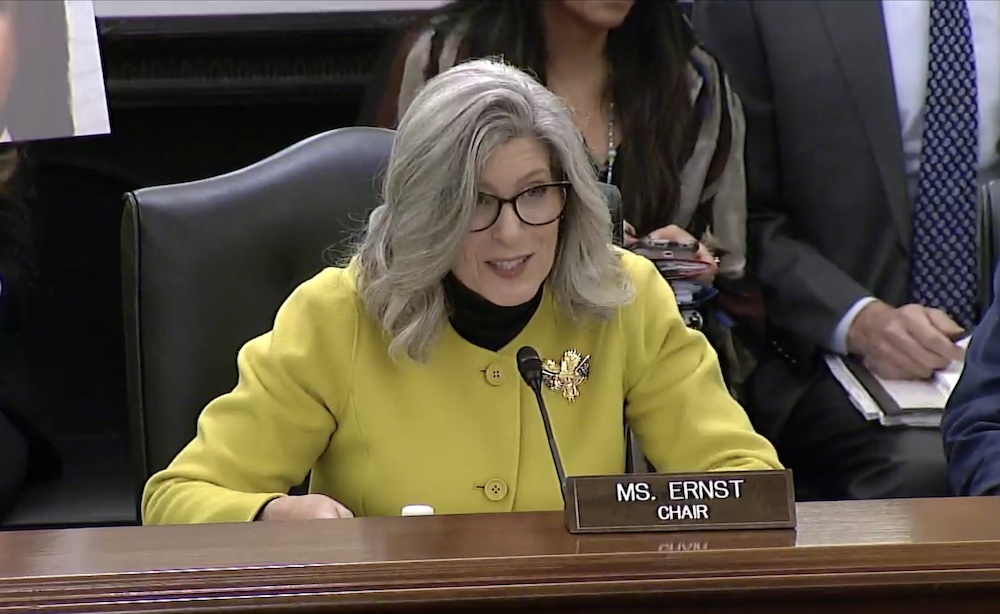
Ernst, who chairs the Senate Committee on Small Business and Entrepreneurship, used a Wednesday hearing to urge federal agencies to pause new 8(a) sole-source awards while they audit the program for alleged abuse and fraud. The stakes are significant: the 8(a) program generated more than $25 billion in federal contract awards last year, including $16.1 billion to Native-owned enterprises, according to HigherGov, a federal contracting intelligence firm.
She argued that inadequate oversight has allowed companies under investigation to continue receiving multimillion-dollar federal contracts and, in some cases, to subcontract the work in violation of SBA rules.

“Unfortunately, the SBA 8(a) program has been a magnet for fraudsters since its inception,” Ernst said during the hearing, adding that decades of oversight had not demonstrated that the program is “worth taxpayers’ investment.”
Sen. Edward Markey (D-Mass.), the committee's ranking member, pushed back, saying the program has opened doors for disadvantaged businesses for more than four decades and that isolated abuses do not justify halting it. “These rare instances do not warrant an all‑out assault on a program that has created good‑paying jobs, provided pathways to success and created economic growth for our country,” he said.
The hearing came as SBA is conducting a sweeping review of the 8(a) program. On Dec. 5, the agency ordered roughly 4,300 participants to submit three years of financial records by Jan. 5 — including general ledgers, bank statements, payroll registers and subcontracting agreements — or risk suspension from the program. The mandate expands an audit SBA launched in June to examine whether some firms used 8(a) status to obtain sole-source awards while passing most of the work to other contractors.
While the Senate hearing today spotlighted allegations of misuse, tribally owned federal contracting enterprises also took issue with a set of letters Ernst sent to federal agencies in advance of the hearing. Several of the companies named in the letters — including tribal, Alaska Native and Native Hawaiian enterprises — told Tribal Business News that the claims relied on flawed data and misinterpretations of SBA rules and regulations for the 8(a) program, and said they were never contacted before the letters were sent.
On Dec. 8, Ernst sent letters to 22 federal agencies — including the departments of Defense, Interior, Energy and the General Services Administration — urging them to pause 8(a) sole-source contracting and to review awards dating back to fiscal year 2020. The letters cited several Native-owned federal contracting enterprises as examples of what Ernst described as systemic problems in the program.
The companies referenced include Dawson MCG, LLC, a subsidiary of Hawaiian Native Corporation; Chenega Corporation, an Alaska Native Corporation with two allegedly overlapping 8(a) subsidiaries; Cherokee Nation Strategic Programs, LLC; and NANA Regional Corporation, which Ernst said operated two subsidiaries under the same business identification code. Her letters also raised concerns about enterprises owned by the Poarch Band of Creek Indians and the Mashantucket Pequot Tribal Nation.
Ernst said the enterprises cited in the letters illustrate concerns about oversight in the 8(a) program, including allegations related to subcontracting practices, company investigations and the operation of multiple 8(a) subsidiaries.
But tribal companies contacted by Tribal Business News said the allegations in the letters misstated key facts and misapplied SBA rules, and several noted they were never contacted before being publicly named.
Cherokee Federal said the information in Ernst’s letters was “incomplete and inaccurate.”
“Our companies were and remain in full compliance with all Small Business Administration and Federal Acquisition Regulation requirements, including subcontracting limitations,” a Cherokee Federal spokesperson said in an email to Tribal Business News. “We have notified the committee of these errors and reiterated our commitment to full clarity and transparency.”
Hawaiian Native Corporation, speaking for its Dawson MCG, LLC subsidiary, shared a copy of its response to Defense Secretary Pete Hegseth after Ernst accused the company of continuing to pursue contracts while under federal investigation.
“HNC and its companies are not and have not been under investigation,” company leaders wrote in their letter to Hegseth. “While it is true that the Department of Justice is investigating certain former employees, HNC and its companies have fully cooperated with both the DOJ and SBA to address issues identified by either agency in their investigations.”
Calista Corporation, an Alaska Native Corporation, also rejected claims in Ernst’s letters, saying the senator misinterpreted rules about NAICS codes and how they apply to tribally and ANC-owned firms. Thom Leonard, Calista’s vice president of corporate affairs, said two subsidiaries — Brice Engineering, LLC and Brice Integrated, LLC — operate under different size standards that are permitted under SBA regulations and have been approved by the agency.
“Calista values the 8(a) Program … and strictly complies with SBA rules,” Leonard wrote in an email. “Calista and the companies take their responsibilities as federal contractors seriously, and have a robust compliance system in place to ensure that all applicable federal regulations are satisfied.”
The Poarch Band of Creek Indians also disputed Ernst’s assertions, saying the senator “miscalculated the numbers” used to claim the tribe’s PCI Government Services contracting firm fell out of compliance with 8(a) rules. The tribe notified Ernst and the committee of the mistake and expects the public record to be corrected.
“We remain committed to transparency and working with federal partners to make sure the facts are clear,” the tribe said in a statement to Tribal Business News.
Quinton Carroll, executive director of the Native American Contractors Association, said Ernst’s letters rely on faulty assumptions about how the 8(a) program works for tribally owned, Alaska Native and Native Hawaiian enterprises. He told Tribal Business News the committee did not contact the companies it named, despite the availability of “legal and compliant explanations” that could have corrected the record before publication of the letters.
Native-owned 8(a) participants operate under “stringent compliance, reporting, and oversight standards,” Carroll said, noting that every award is reviewed for fair pricing and adherence to federal regulations. He added that these firms play an outsized economic and national-security role: Native federal contracting supports an estimated 125,000 American jobs and funds education, health care, public safety and infrastructure in Native communities.
“It would be very unfortunate if these businesses that support tribal and Native communities see material damages as a result,” Carroll said.
Carroll said NACA is prepared to work with the administration and Congress to maintain the integrity of the 8(a) program and prevent policy decisions that could unintentionally harm Native-owned enterprises.
Sen. Lisa Murkowski (R-Alaska) said Ernst’s call to halt 8(a) contracting reflects a misunderstanding of how the program functions for Alaska Native Corporations and other Native enterprises. She said the proposal would have significant economic consequences and appears driven more by a lack of information than by evidence of systemic abuse.
“So much of this is education,” Murkowski told Tribal Business News. “Yes, it raises alarms for me — and for the entire Alaska delegation — because there is real value that comes through the 8(a) program and how it is structured.”
Murkowski said she has raised the issue with Ernst in the past and believes further dialogue is needed. She said Alaska Native Corporations have attempted to explain how the program works but is unsure “how much of an audience they have received.”
“We all need to do a better job of educating her and her team,” she said.
According to HigherGov, the SBA’s 8(a) program accounted for more than $25 billion in federal contract awards in fiscal 2024. Native-owned entities received $16.1 billion of that total, including $14.9 billion in sole-source awards. Across all federal programs — not just 8(a) — tribes and Native enterprises received $26.2 billion in federal contract awards in fiscal 2024.
Tribal Business News reached out to both Ernst’s office and the SBA for comment, but had not heard back from either when the story went live. A spokesperson for Ernst later responded, saying the senator “will always fight for transparency in Washington to ensure the American people know how every tax dollar is spent. 8(a) contractors who did nothing wrong should welcome the full audit and review of the program that Ernst has called for.”