- Details
- By Chez Oxendine
- Real Estate
California regulators have ordered a Humboldt County developer to transfer a bayfront property to three Wiyot-area tribes as part of a settlement resolving years of coastal and wetland violations, according to an agreement approved this month by the California Coastal Commission.
The settlement requires developer Travis Schneider to convey the land to a nonprofit representing the Wiyot Tribe, Blue Lake Rancheria and the Bear River Band of the Rohnerville Rancheria. He must also pay a $400,000 administrative penalty, restore the site and fund tribal monitors during the restoration process, according to commission documents and reporting by Lost Coast Outpost.
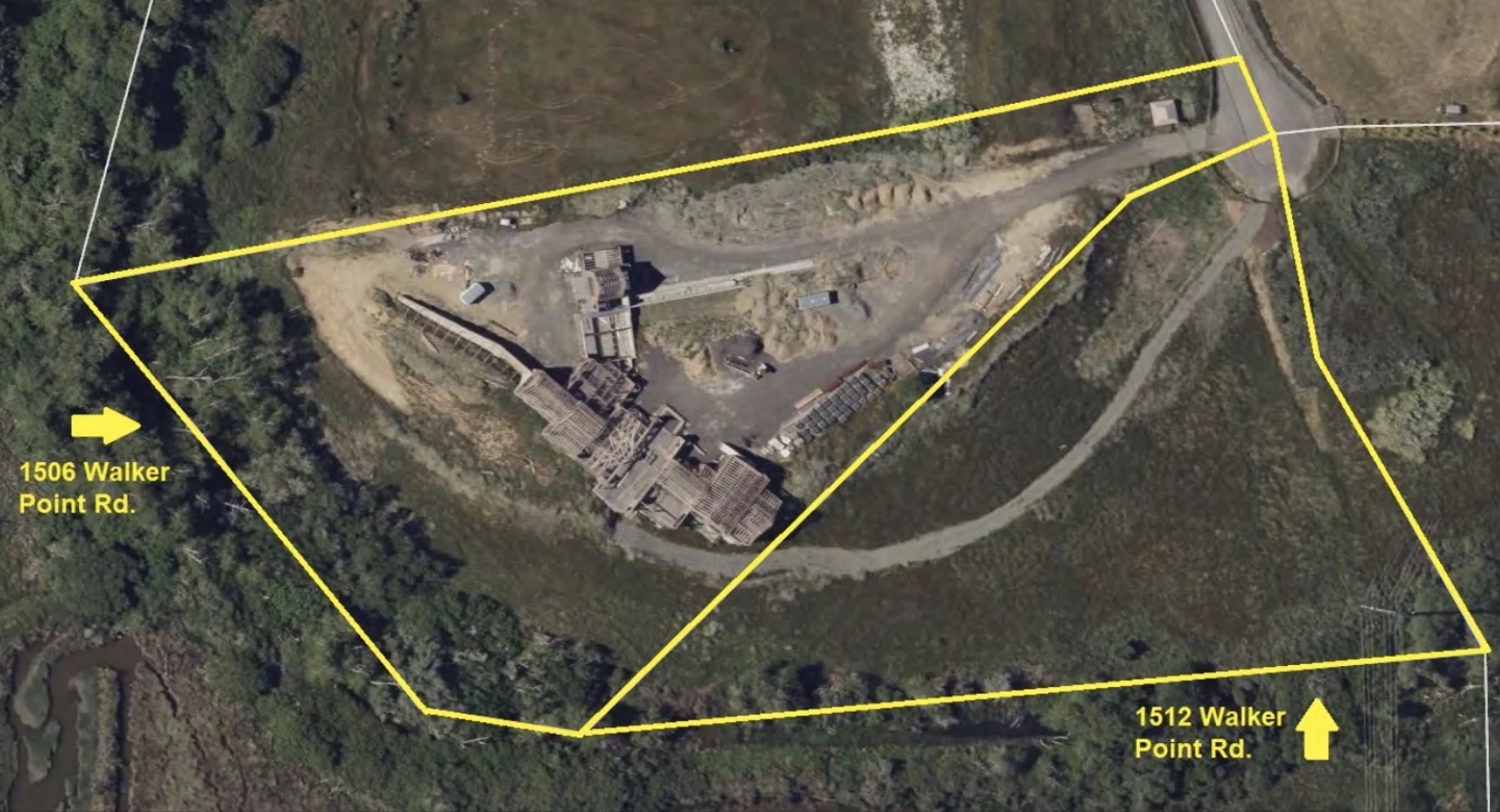
The agreement ends a long-running enforcement case involving Schneider, who began building a residence near Humboldt Bay in 2018. Commission staff found that Schneider expanded the home far beyond the 8,000 square feet approved by Humboldt County planners, ultimately constructing more than 21,000 square feet and encroaching into a required 100-foot wetland buffer. Staff also cited an unpermitted access road and the removal of native vegetation.
County officials issued a stop-work order in 2021, but construction continued, according to a Jefferson Public Radio (JPR) report.
Commission documents describe the property as containing well-preserved cultural materials linked to a historic Wiyot village. The agency withheld details about those materials due to their sensitivity.
“There is no other known or similar site in the Humboldt Bay region that contains such uniquely well-preserved cultural materials,” the Commission wrote in its findings.
Wiyot Tribal Administrator Michelle Vassel told commissioners that tribal citizens faced hostility when they first reported the violations.
“When the tribe and others alerted the county to the violations, we were met with public displays of racism, threats, accusations — called liars,” Vassel said.
Speaking to JPR, Commissioner Caryl Hart supported the outcome.
“You want to talk about environmental justice, there is no more just result than the one here,” Hart said.
Schneider’s attorney, Brad Johnson, disputed claims that construction damaged cultural resources or wetlands. He said an archeologist hired by the developer found no evidence of harm and noted that the home sits on a former quarry site.
Schneider has two months to begin the transfer process.