- Details
- By Chez Oxendine
- Policy and Law
A sweeping water-rights settlement for northeastern Arizona won unified tribal support at a Senate oversight hearing Wednesday, even as the Department of the Interior warned Congress the $5 billion plan may exceed available federal funding.
The Senate Committee on Indian Affairs reviewed the Northeastern Arizona Indian Water Rights Settlement Act (S. 953), which would resolve decades of water litigation among the Navajo Nation, the Hopi Tribe and San Juan Southern Paiute Tribe while authorizing major federal investments in drinking water infrastructure.
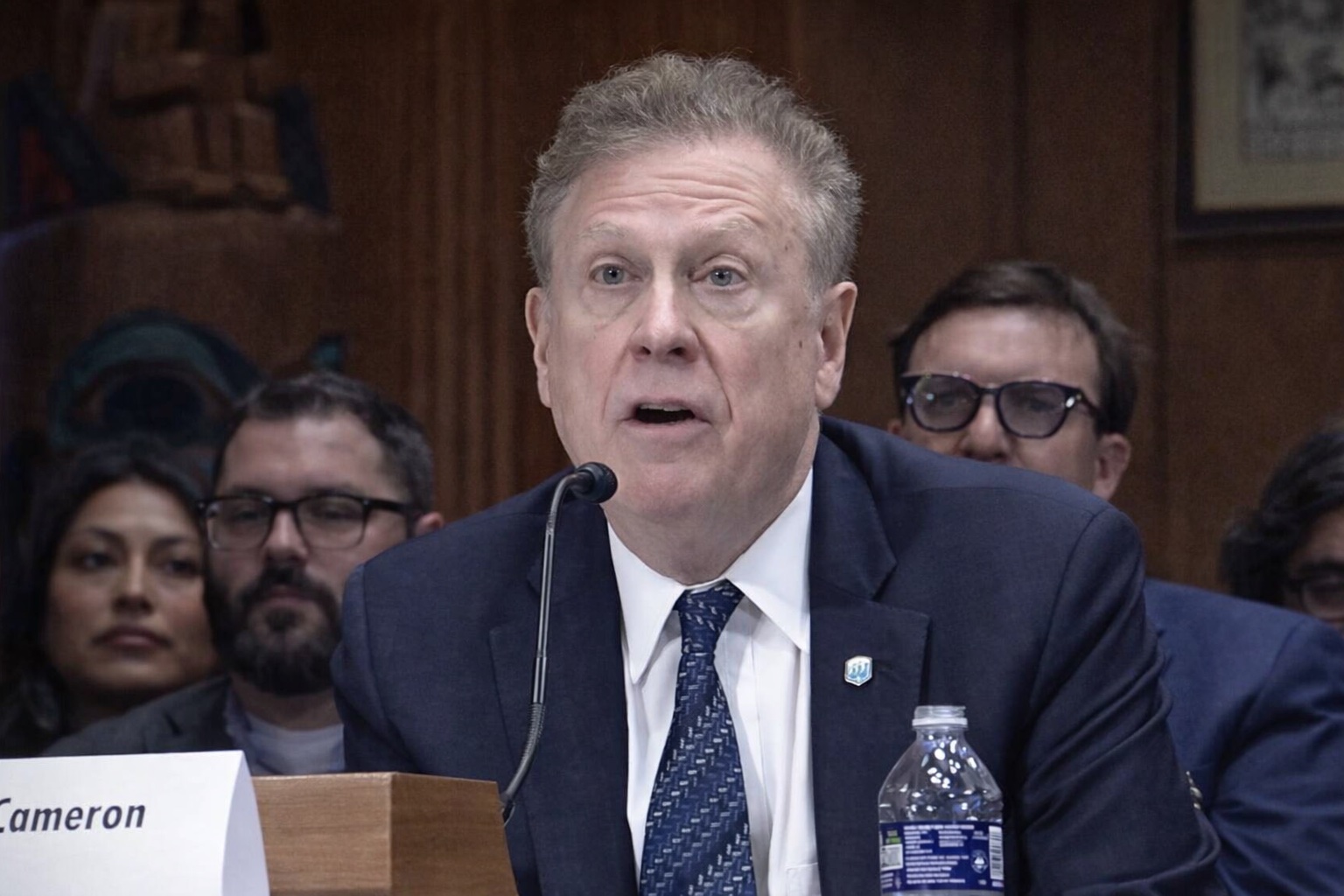
Bureau of Reclamation Acting Director Scott Cameron, testifying for Interior, said the administration supports the settlements, but raised concerns about cost.
“There very definitely is a funding gap,” Cameron said. “Five billion dollars is a lot of money.”
In written testimony, Cameron said the department supports negotiated settlements because they are preferable to “protracted and divisive litigation.” But he warned the federal government must weigh costs carefully, noting more than $13 billion in Indian water rights settlements are currently pending before Congress.
Cameron said the Reclamation Water Settlement Fund already lacks sufficient resources to complete previously approved settlements, leaving little capacity for new projects at the scale proposed in S. 953.
Committee Vice Chair Brian Schatz (D-Hawaii) asked whether the fund could support pending settlements, including S. 953, if enacted today. Cameron said it could not.
“We could not support S. 953,” he told the panel. “There isn’t enough money in the fund.”
Despite those concerns, tribal leaders urged Congress to move forward with the legislation, describing it as a rare opportunity to resolve decades of legal disputes and secure a sustainable water future.
Navajo Nation President Buu Nygren said the settlement would help close a long-standing water access gap in a nation where more than 30% of households lack running water.
“When water arrives, economies thrive,” Nygren said.
The bill would quantify Navajo rights to Colorado River water, tributaries of the Little Colorado River and groundwater beneath the reservation. It would also establish a $2.8 billion Navajo Nation Water Settlement Trust Fund to support regional groundwater projects, treatment facilities, storage tanks and related infrastructure.
At the center of the proposal is the iiná bá‑paa tuwaqat'si pipeline, a $1.7 billion project that would move Colorado River water from Lake Powell to tribal communities across northeastern Arizona, delivering water to tens of thousands of Navajo and Hopi citizens.
For the Hopi Tribe, the settlement represents a path toward reliable water after generations of scarcity on a landlocked reservation with no perennial streams.
“Hopi can finally envision a future with a reliable supply of safe, clean drinking water and essential water infrastructure,” Chairman Lamar Keevama said.
The legislation would secure Hopi access to both Upper Basin and Lower Basin Colorado River water and support groundwater and village‑level projects. It would also formalize intertribal agreements with the Navajo Nation to manage shared aquifers and washes.
For the San Juan Southern Paiute Tribe, the bill carries a meaning that is both legal and deeply personal. Vice President Johnny Lehi Jr. told senators that S. 953 would finally ratify a long-standing agreement with Navajo Nation and create the tribe’s first exclusive reservation.
“There is no way to measure what this legislation means to the San Juan Southern Paiute people,” Lehi told senators. “Without a reservation, my people have lived for generations as outsiders in our own homeland.”
The bill would set aside roughly 5,400 acres for the tribe and provide up to 350 acre‑feet of water annually, along with funding for groundwater development, agricultural conservation and long‑term water systems operation.
Lehi urged lawmakers to advance the legislation so future generations can finally see the agreement fulfilled.
“For us, the heart of it is simple,” Lehi said. “We ask Congress to advance S. 953 so our elders and our children can finally see that promise fulfilled on a homeland that is real.”
Brian Edwards contributed reporting.