- Details
- By Chez Oxendine
- Real Estate
A 600‑acre forested property in New York’s Adirondacks has been returned to Indigenous stewardship through a land transfer facilitated by The Nature Conservancy.
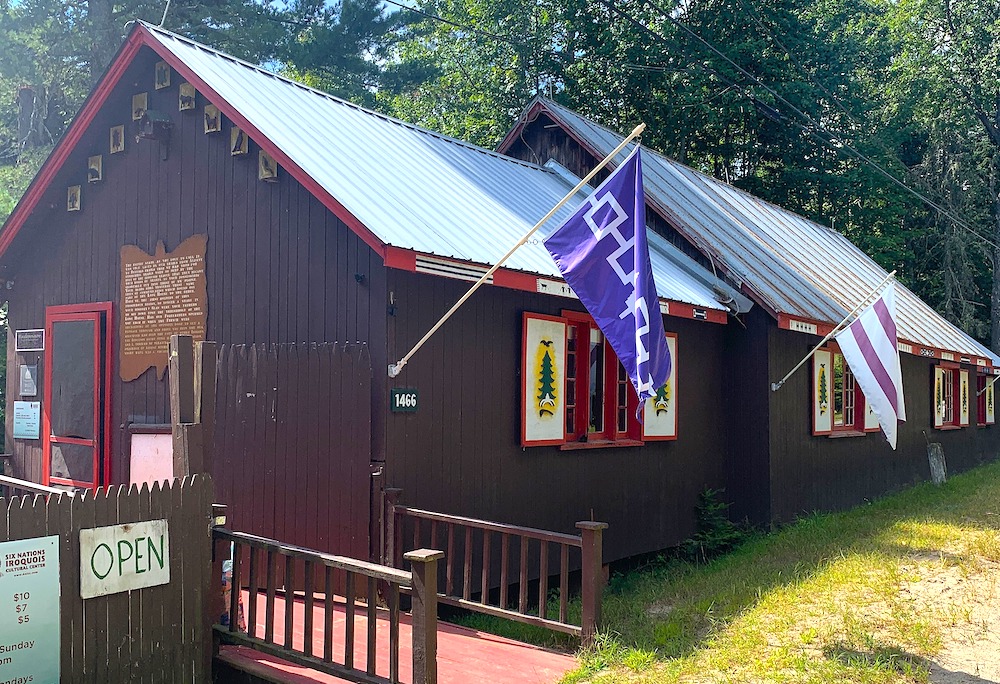
The parcel was purchased from Paul Smith’s College by the Six Nations Iroquois Cultural Center with assistance and funding from The Nature Conservancy. It will be stewarded by the Culture Center and the Haudenosaunee community for long‑term cultural and ecological use, said Peg Olsen, Adirondack chapter director for the Conservancy.
Olsen said the $1.1 million acquisition, supported through fundraising and funding assistance from The Nature Conservancy, fulfills a request raised during annual Justice for the Land retreats, where Haudenosaunee community members identified the need for a permanent home for the Native Earth Program and a protected forest base in the region.
The Conservancy helped identify the property, negotiate the purchase agreement with Paul Smith’s College and raise the funds before transferring the property to the Cultural Center March 9. Olsen said the land’s location, cabins and main lodge aligned with the needs expressed by Haudenosaunee partners during years of conversations.
In a press release, the Conservancy said the property’s forests, wetlands and wildlife habitat will be protected while supporting cultural education and youth programming. The land includes cabins and a main lodge that will serve as a base for the Native Earth Youth Program, which has operated for years without a permanent home.
Bill Ulfelder, executive director of The Nature Conservancy in New York, said the partnership represents a significant milestone for conservation work in the state.
“This is a historic moment and a powerful example of what is possible when we follow the leadership of Indigenous communities,” Ulfelder said.
The organization said the land will be stewarded privately by the Cultural Center and managed according to Haudenosaunee values. The Conservancy described the transfer as a continuation of its Indigenous Partnerships Program, which focuses on shared stewardship, cultural continuity and long‑term ecological health.
Neil Patterson Sr., a member of the Tuscarora Nation and a longtime leader in Haudenosaunee environmental education, said the return strengthens a generational effort to reconnect young people with the land.
“This is a place where our youth can learn who they are by being on the land,” Patterson said. “It is a place for teaching, for ceremony and for continuing the responsibilities our ancestors passed to us.”
The Cultural Center plans to host a summer “bio‑blitz” to document plant life on the property, including medicinal and sensitive species that will guide future trail development. The work builds on a 2022 acquisition of 330 acres west of the center, most of which is expected to be placed under a conservation easement through the Adirondacks Land Trust.
David Fadden, director of the Cultural Center, said he feared the land would be sold to developers before The Nature Conservancy intervened.
“It came to my attention that this land was up for sale. I thought the worst case scenario is you get developers moving in,” Fadden said. “TNC informed me that they wanted to purchase it and give it to us, and it didn’t sink in until we closed on the property.”
Fadden said the site holds deep personal and cultural meaning. His grandfather founded the museum as a place to bring Native youth outdoors and connect them with history. Roughly 20 acres of the new acquisition will be used to build a new cultural center to better house the current center’s artifact collection.
Fadden said the new property will also finally give the Native Earth Program, the environmental task force and the Haudenosaunee Confederacy a permanent base.
“They never had a place, a headquarters. It was always a struggle. Now they have a home,” he said. “It’s beautiful, it’s quiet, and it’s a nice place to gather.”
According to the Conservancy, the combined properties will support cultural education, ecological stewardship and long‑term conservation led by the Haudenosaunee community.
“When we put in trails, we'll avoid those more sensitive areas,” Fadden said. “It’s very satisfying to know this land is going to be preserved.”