- Details
- By Brian Edwards
- Policy and Law
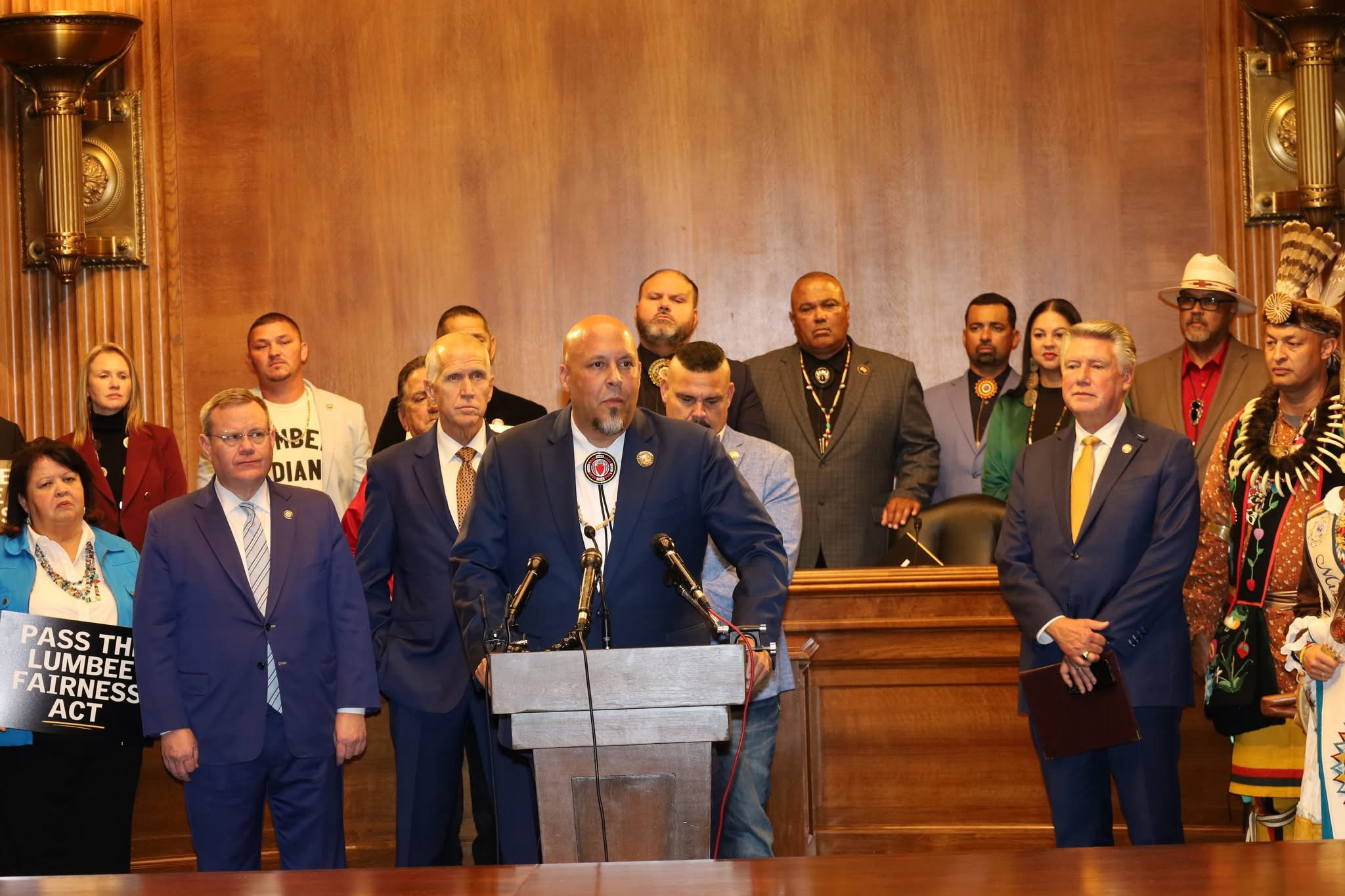
Congressional negotiators on Sunday released the text of the annual National Defense Authorization Act, a sweeping defense and national security bill that includes multiple provisions affecting tribal nations — headlined by federal recognition for the Lumbee Tribe of North Carolina.
The legislation extends federal recognition to the Lumbee and directs the federal government to begin treating the more than 55,000-member tribe as a federally recognized nation, according to bill language. Members living in Robeson, Cumberland, Hoke and Scotland counties in North Carolina would be considered to reside “on or near an Indian reservation” for eligibility purposes under federal programs.
Under the measure, the U.S. Department of the Interior and the Department of Health and Human Services would work with the tribe to determine the level of federal services needed. The agencies must provide Congress with those estimates in the first budget submitted after verification of the Lumbee tribal roll.
The bill also authorizes the Interior Secretary to take land into trust for the Lumbee Tribe within its four-county service area, which could support future development and jurisdictional authority.
Federal recognition would make the Lumbee eligible for a wide range of federal benefits and programs available to other recognized tribal nations, including services under the Indian Reorganization Act.
The Lumbee have sought federal recognition for decades. Prior efforts passed the House, but stalled in the Senate. The tribe was recognized by Congress in 1956, but denied services typically provided to federally recognized tribes, leading to years of legislative attempts to correct that partial status.
In January, President Donald Trump issued an executive directive calling for a plan to secure full recognition for the Lumbee Tribe through legislation or other available mechanisms, citing the tribe’s historical and modern significance.
Alongside the Lumbee provision, the NDAA text includes other Indian Country measures. A newly defined category of “cultural resource” would include sacred sites, treaty or trust resources, and subsistence resources belonging to or controlled by tribal nations or their citizens, strengthening protection for those areas in the context of defense and national security activities.
The legislation also affirms that “Indian Tribes,” “Tribal organizations” and “Native Hawaiian organizations” are eligible entities for various provisions in the bill addressing environmental cleanup, cultural resources and natural resource management.
If passed by Congress and signed by the president, the measure would resolve one of the longest-running recognition cases in the country and immediately shape federal–tribal relationships in southeastern North Carolina. The recognition language outlines a two-year deadline for verifying the Lumbee membership roll, after which the tribe would gain full access to federal programs.
If enacted, it would mark the second time Trump has signed legislation that extends federal recognition to a tribe. The Little Shell Tribe of Chippewa Indians of Montana gained recognition in 2019 through an amendment to that year’s defense bill, granting access to federal health, housing, education and economic programs and establishing a formal government-to-government relationship.
Congress typically moves to pass the defense bill before year-end. Its inclusion of multiple tribal provisions reflects ongoing negotiations on issues that directly affect tribal governments, community services and resource protections.