- Details
- By Chez Oxendine
- Real Estate
Minnesota tribes paid an estimated $7 million in property taxes on tribally owned fee land in 2023, according to a new Center for Indian Country Development analysis that highlights one of the ongoing costs of rebuilding tribal land bases.
The study, presented at CICD’s 2026 data summit, also found that tribal land purchases in Minnesota grew 25% between 2014 and 2023. Yet only a portion of that acreage has been transferred into trust, leaving tribes to shoulder significant tax burdens on land they have had to buy back.
The study is based on a CICD initiative called the Tribal Indian Land Tracker, or TILT, a parcel‑level database built from publicly available county assessor records. Matt Gregg, a senior economist at CICD, described the Minnesota project as a first step toward expanding the database nationwide.
“Tribes are rewriting their narrative away from Native land dispossession and towards Native land restoration,” Gregg said.
The Minnesota pilot analyzed land records for all 11 federally recognized tribes in the state from 2014 to 2023. CICD found fee land purchases accounted for much of that growth, with 21.4 percent of tribal acreage held in taxable status in 2023.
Tribal governments and enterprises paid an estimated $7 million in property taxes that year. Gregg said the numbers represent a lower‑bound estimate because TILT does not capture trust consolidation recorded only in Bureau of Indian Affairs files.
Casey Lozar, CICD executive director, said the Minnesota findings may reflect a broader national trend. He said more tribes are positioned to acquire land than at any point in recent decades, but those decisions are increasingly shaped by data.
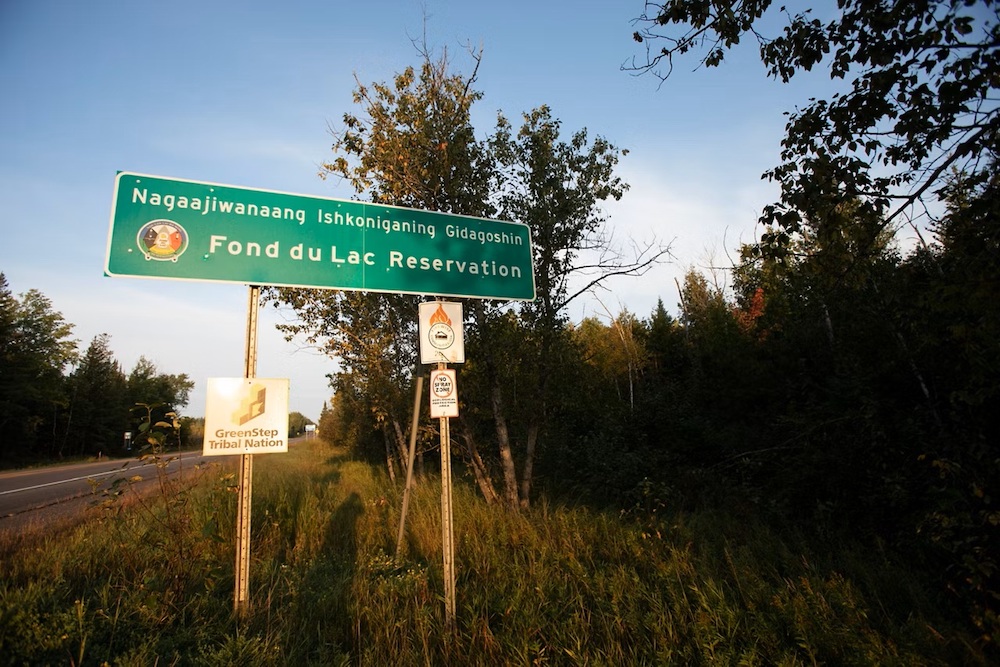
For the Fond du Lac Band of Lake Superior Chippewa, the numbers reflect a long‑running strategy that blends fee land acquisition with structured trust consolidation. Land Information Manager Emilia Holstine said the band uses the American Indian Probate Reform Act’s purchase‑at‑probate process to buy trust interests as they pass through inheritance.
Doing so helps reduce future fractionation, the continued division of ownership interests among heirs that can slow tribal land restoration.
Holstine said accurate data is essential for making those decisions. Fond du Lac spent years collecting GPS coordinates for boundary markers to correct analog maps that were off by hundreds of feet. The band now maintains a digital system that tracks ownership, wetlands, contested histories and resource information for each parcel.
“We try to purchase as much trust land as we can to prevent it from leaving trust status,” Holstine said. “Having that robust data set to work off of is extremely helpful.”
On the Rosebud Reservation, the Tribal Land Enterprise has been consolidating trust land since 1943. Executive assistant director Adelita Guerue said the office targets tracts where the tribe holds at least 51% ownership, the threshold needed to control a parcel under federal rules. She said inconsistent data from counties, the state, and the BIA complicates efforts to expand the land base.
Those differences aren’t mere acres,” Guerue said. “They’re thousands of acres.”
Land Tenure Foundation President Howard Valandra said tribes need long‑term acquisition plans that survive changes in administration. He noted that Rosebud purchased roughly 10,000 acres of fee land per year during his tenure in the 1990s, then placed those parcels into trust.
If you have a good plan and you implement it, it can outlast the transitions and the changers,” he said.
Gregg said CICD plans to expand TILT nationwide to build a national data set and clearer view of tribal land reclamation.