- Details
- By Chez Oxendine
- Finance
Ted Piccolo has one piece of advice for tribes seeking financing: Have your data ready before you ask for money.
The longtime Native community development financial institution executive said promising projects often lose momentum because tribes can’t quickly produce balance sheets, profit-and-loss statements or financial data when lenders ask.
“Do that now,” Piccolo said. “You get the engine all started up and running, and if you don't have the financials, you just turn it off.”
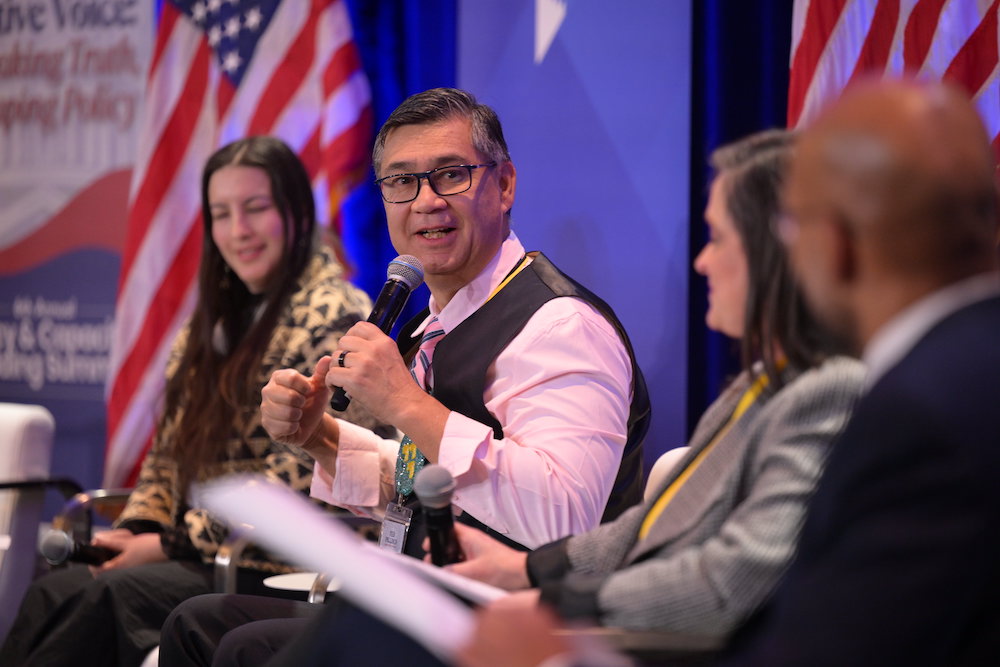
Piccolo, senior director of Indigenous Futures at San Diego-based Mission Driven Finance, was among the speakers who discussed the role of data and financial readiness in tribal economic development at the Center for Indian Country Development’s 2026 Data Summit. Afterward, he spoke with Tribal Business News about capital weaving, impact data investing and why strong financial preparation remains one of the biggest factors in getting tribal projects financed.
This interview has been edited for length and clarity.
Tell me about Mission Driven Finance’s work in Indian Country and how you got involved.
We are a mission-based investor. About three years ago, there started to be more and more of a call for investing in Indian Country. Up until that point, we did a lot of investing in California and started broadening out throughout the rest of the United States.
When we started getting more calls about investing in Indian Country, that is when I came on board. I have nearly two decades of experience in the Native CDFI industry and built relationships across the Native CDFI world.
So, we developed this strategy of weaving together capital, where you bring in many different lenders on complex, complicated projects. The projects themselves are larger than what the balance sheet of any individual Native CDFI can handle, but by bringing lenders together, you can actually get the financing accomplished.
What data matters most when evaluating a project?
Some folks dig deeper into impact data, and we need that because we’re an impact investor, so we need more than a hard money bank lender might. They’re strictly looking at financials and economics.
Can you give me an example?
The Blue Mountain Mill was a $70 million project, and they had a gap of $7 to $9 million. So, we pulled together eight Native CDFIs — you guys did the story on that.
But still, even in that, economics drove the investing. The data regarding impact is what gets you to look at a project, but the economics then have to work. Looking at the economics of any financing package really hasn't changed ever.
You still have to have a certain amount of revenue versus a certain amount of expenses and contingency plans. All that stuff has not changed, really.
What’s driving more investor interest in Indian Country?
What really moves the needle is when projects get funded and they work out. When they repay financing, often ahead of schedule, that’s what a lot of investors look at.
As some of these larger projects we’ve woven together start to succeed, conventional lenders are noticing. That’s drawing attention.
There might be data out there that says economic impact studies are what is moving the needle, but from what I have seen, projects that are getting attention are projects that get completed.
Where are you seeing the strongest demand for capital today?
My preference is Indian Country, but the strongest growth seems to be in larger agriculture enterprises and energy.
We’re seeing a lot of value-added agriculture projects — seafood, meat processing, flour mills — with budgets in the multi-million dollar range. Tens of millions of dollars are going into agricultural projects.
Energy has also seen a big push over the last eight years, and a lot of projects that were in the thought stage back then are now moving through the pipeline and lining up for financing.
What's the most important advice you'd give tribes preparing to finance a project?
Slow and steady wins the race. Tribes need to get their books in order now, keep them in order, stay on top of them and be able to access their balance sheet right away. They need their profit and loss statement and projections ready.
Tribes should get those financials ready before they start having financing discussions. Beef up staff if needed, especially accounting staff, and be ready to answer questions. Not knowing your financial position is the single biggest thing that slows or stops a project.