- Details
- By Chez Oxendine
- Energy | Environment
Covering Indian Country energy in 2025 felt a little like watching someone finish some wiring, hit the switch, and hearing a “pop” somewhere as the bulbs flickered and died. The repair work now is less about flipping the switch again than rebuilding the system behind it.
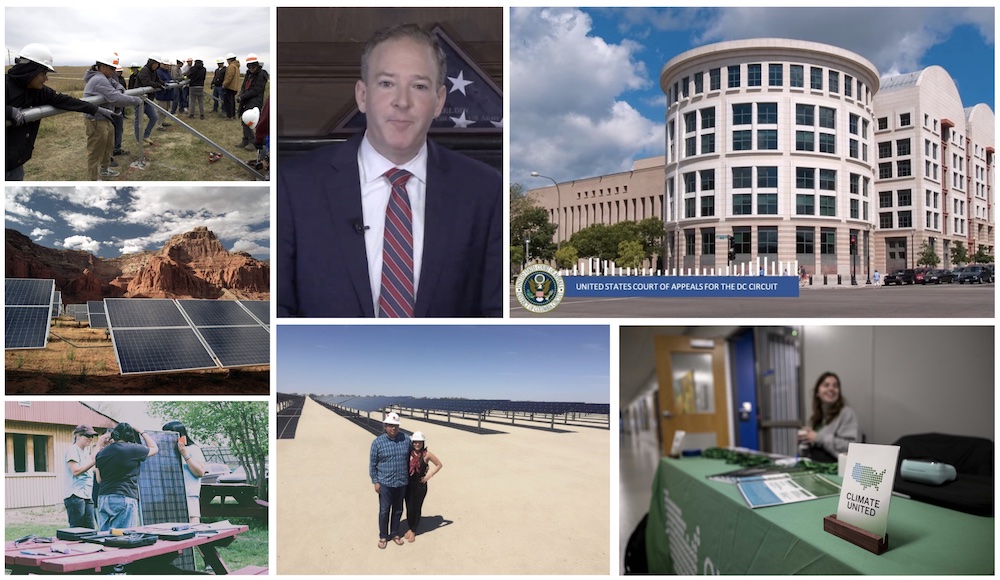
What had appeared to be a stable power source for the clean energy transition in Indian Country went dark almost overnight. In February, Environmental Protection Agency Administrator Lee Zeldin announced — in a scripted YouTube video — that the agency would freeze $20 billion across two programs under the Greenhouse Gas Reduction Fund, a $27 billion allocation created by Congress under the 2022 Inflation Reduction Act.
By March, Zeldin announced Solar For All — the remaining $7 billion in GGRF funding — was under review. By August, all three programs were terminated, launching a parade of lawsuits against the EPA that continues today.
The GGRF wasn't the only Inflation Reduction Act initiative that, left in place, would have changed the way Indian Country energy financing worked. Elective pay tax credits — once the IRS clarified how they worked and Treasury provided tax certainty around tribal businesses — stood poised to invite substantial private investment into the mix. Those incentives are now set to rapidly sunset.
Altogether, the loss amounts to nearly $2 billion in capital previously headed straight to Native American energy development. Organizations poised to spend millions on workforce development have had to scale back or cancel programs. Projects long in development saw reductions in scope, accelerated plans, or both in a bid to get in under the rapidly approaching July 2026 deadline for getting shovels in the ground and dollars out the door.
Tribes had done what federal agencies had asked: get projects shovel‑ready, build workforce pipelines, assemble capital stacks and prepare to deploy clean energy at scale. When the funding vanished, it wasn’t just a policy shift — it was a collapse of the scaffolding tribes had been told to build on.
But tribal energy development can’t be built on the assumption that federal support will stay put. Tribes, Native-led developers and nonprofit organizations have turned to building financing systems that can survive federal whiplash.
Cheri Smith, chief executive and founder of the nonprofit Alliance for Tribal Clean Energy, said the group is leaning on its Weaver Platform, a project‑finance tool designed to help tribes build capital stacks that rely less on federal grants and more on mission‑driven investors and lenders. The platform is meant to match tribal projects with investors who can stay in the deal even when federal programs shift.
Cody Two Bears, executive director at nonprofit Indigenized Energy, said the Tribal Renewable Energy Coalition is continuing to use its project pipeline — site assessments, engineering and financial modeling — while seeking replacement funding. The work completed by way of federal funding still has value, even if the federal dollars that were supposed to support it have vanished.
At the annual summit of the Native CDFI Network in Washington, D.C. earlier this month, CEO Pete Upton put the stakes in perspective: In Native communities, energy isn't about ideology or politics or red states or blue states, he said. It's about survival. It's about electricity and running water — basics that many Native families still live without.
“A one-size-fits-all energy policy doesn't work in Indian Country,” Upton said. “It's not practical. It's not realistic. And it's definitely not sovereign.”
Federal support hasn't entirely disappeared. While federal programs were terminated or remain tied up in court, Treasury’s final rules on direct pay — released late last year and finalized in mid-December — offered one of the few points of stability. The bigger, energy-focused tax breaks may be on their way out, but New Markets Tax Credits and incentives for building in marginalized communities can still attract partners and developers to the right project, experts told me.
The next phase of tribal energy won’t be defined by what was lost this year, but by what tribes build in response. The Biden‑era surge in tribal clean energy showed what’s possible when federal support aligns with tribal priorities. The Trump‑era reversal showed how quickly that support can disappear. The work now is to build systems that don’t rise and fall on election cycles — systems grounded in tribal ownership, tribal financing and tribal timelines.
The federal pullback slowed the transition, but it didn't stop it. Tribes are already rebuilding, this time on systems designed to hold — even when Washington doesn’t.