- Details
- By Chez Oxendine
- Sovereignty
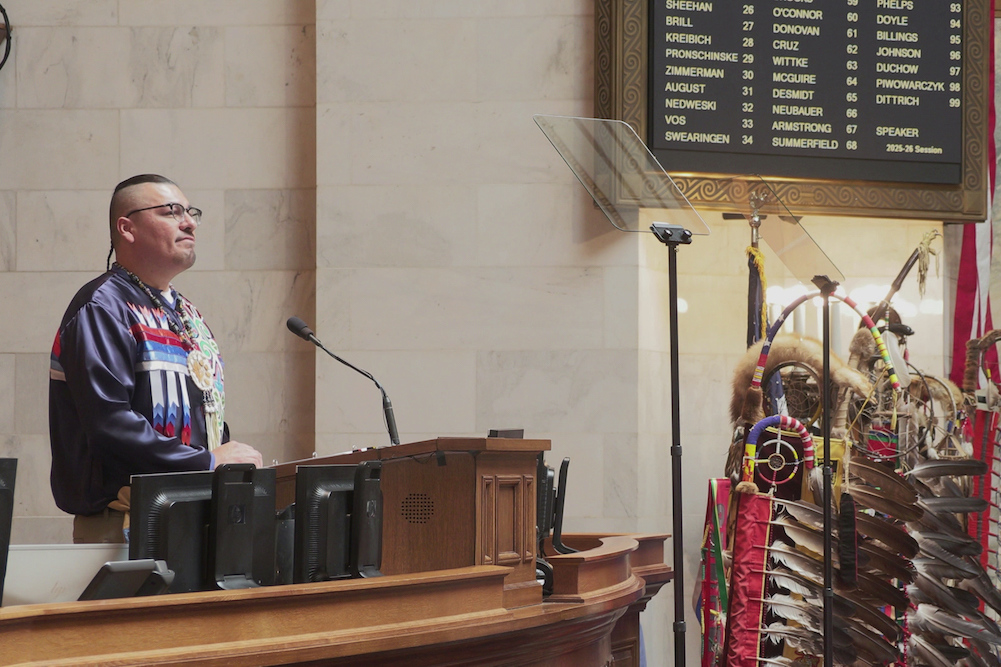
Wisconsin tribal leaders will gather at the state Capitol in Madison on Feb. 10 for the 22nd annual State of the Tribes address, one of the few formal moments each year when tribal governments speak directly to state lawmakers from the Assembly floor.
The address will be delivered at 11 a.m. in the Assembly Chamber by Nicole Boyd, chairperson of the Red Cliff Band of Lake Superior Chippewa, on behalf of the Great Lakes Intertribal Council (GLITC). The council represents Wisconsin’s 11 federally recognized tribes and one Michigan-based tribal nation.
In a conversation with Tribal Business News ahead of the address, Boyd said her remarks will reflect both progress and ongoing challenges facing the state’s tribal nations as they head into the 2026 legislative session.
She said she plans to address environmental stewardship rooted in tribal values, economic development, health care funding and cannabis policy, food sovereignty initiatives, emergency response capacity, and continued investment in tribal languages, culture, and governance.
“The goal is to capture (the attention of) as many stakeholders as possible,” she said.
The annual address is intended to provide lawmakers with a broader view of tribal priorities and the role tribal governments play in Wisconsin’s economy, environment, and public life. Past addresses are often cited by tribes and policymakers as a reference point well after they are delivered.
Health care funding is expected to be a central theme. Bryan Bainbridge, CEO of GLITC, said federal support for tribal health services in the Indian Health Service’s Bemidji Area — which includes Wisconsin tribes — continues to fall well short of need.
Tribal clinics rely heavily on third‑party billing to sustain services, Bainbridge said, because base federal funding covers only a portion of the cost of care. The gap leaves tribal health systems stretched.
“It’s funded maybe close to 38% of need,” Bainbridge said. “That’s nowhere near close to where it needs to be,” Bainbridge said.
He also noted that federal dollars flow through the state before reaching tribal governments, leaving tribes dependent on state distribution systems rather than receiving direct support.
“Nothing is really truly directly paid to the tribes. It goes through the state,” he said.
Bainbridge said the annual address is one of the few opportunities for tribal governments to speak directly to lawmakers about those structural issues and the impacts they have on tribal communities. He said the event is also meant to reinforce the role tribes play in the state’s broader economic, cultural, and environmental landscape.
Boyd said she sees the address as a chance to show how tribal and state governments can work together when communication is strong.
“It’s a giant task to capture as much as possible while still being engaging and relatable, not textbook or dry, and telling the story that may help inform us all,” Boyd said. “But this gives us a chance to show the strengths in our governments working collaboratively.”
The event is open to the public. PBS Wisconsin will livestream the address beginning at 11 a.m. on its website, with additional broadcasts on The Wisconsin Channel at 9 p.m. and on WPR News at 7 p.m. that evening. Viewers can watch live or on demand here via PBS Wisconsin.