


- Details
- By Michigan Economic Development Corporation
- Sponsored Storytelling
For generations, the Anishinaabe of the Bay Mills Indian Community (Gnoozhekaaning) have passed their histories on through oral storytelling. Today, that tradition of narrative ownership is taking a modern form, as the Bay Mills Indian Community invites visitors to experience their stunning landscapes and bold heritage, not through a third-party lens, but in their own voice.
Last year, the Bay Mills Indian Community (BMIC) in Michigan's Upper Peninsula launched Destination Bay Mills, an initiative promoting the community’s wide variety of tourist attractions and deep heritage. The project’s roots trace back to former Bay Mills President Bryan T. Newland, who trusted now-current President Whitney Gravelle to photograph and manage Destination Bay Mills' social media presence. Gravelle, an attorney by trade who moonlights as a photographer, shared scenic photos of Bay Mills landscapes with the then-president, helping build their online presence as a tourist destination.
Gravelle began exploring ways to drive more tourism and build momentum from their new digital presence. Her team discovered that Convention and Visitors Bureaus (CVBs) in their area could help them promote, but at a price and without BMIC controlling how they would be presented. The BMIC team decided to create their own, one of the first dedicated tribal CVBs in Michigan.
“By starting our own CVB, we have complete autonomy over our culture,” says President Gravelle. “We dictate the narratives, and can control our resources and campaign.”
Destination Bay Mills
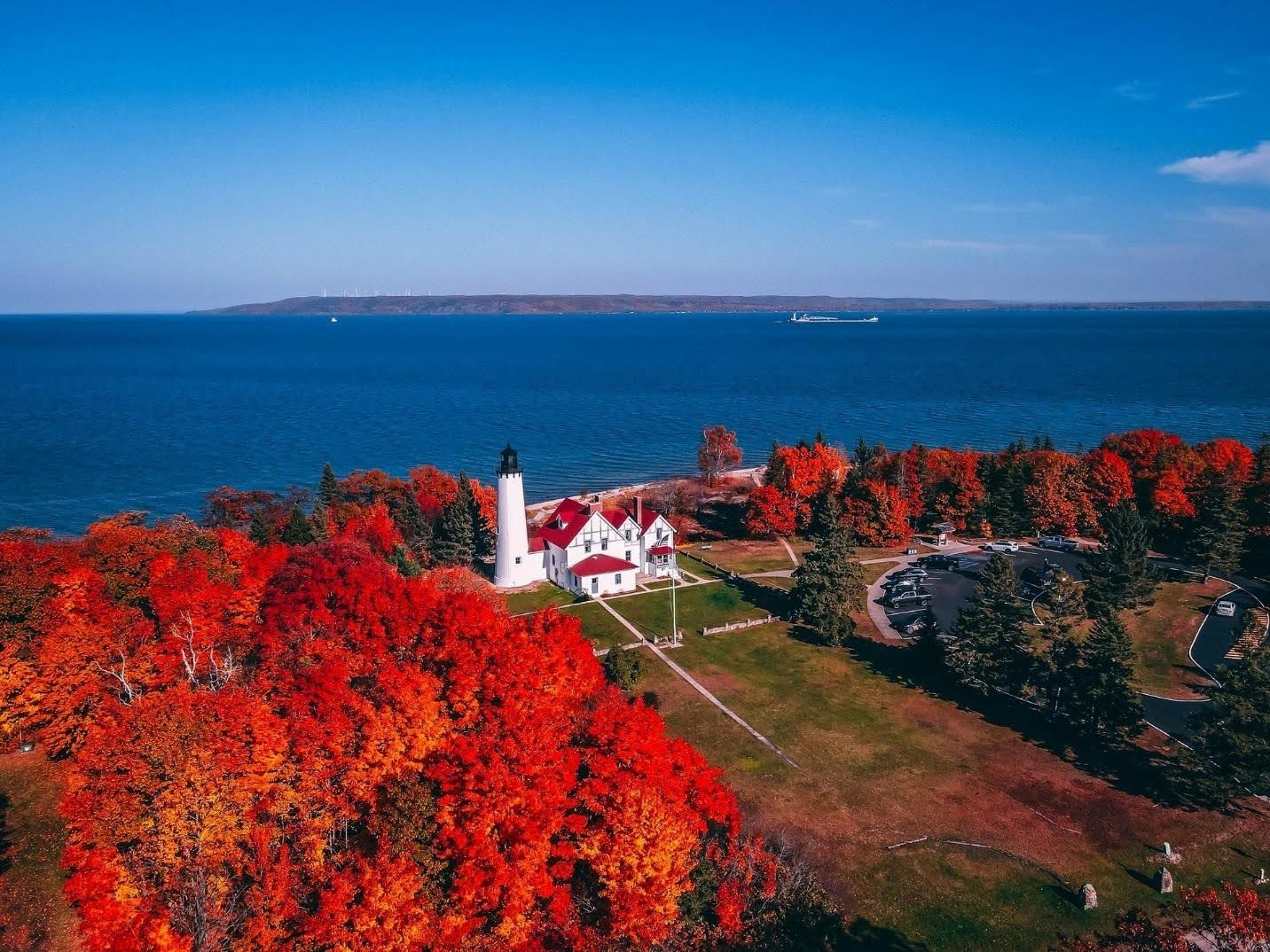
“Destination Bay Mills means we have something for everyone and for all four seasons,” President Gravelle explains. Nestled on the coast of Lake Superior and bordering Hiawatha National Forest, Bay Mills offers an experience that appeals to all types of travelers while feeling one-of-a-kind.
One of President Gravelle’s favorite photography subjects is Mission Hill Overlook, a ridge that rises 165 feet over Spectacle Lake and Lake Superior. It’s the reward of a 3.6-mile hiking loop and just one of the stunning views the area has to offer. The area also offers a wide array of beaches, playgrounds, off-roading areas, golf courses, kayaking, and, most importantly, a warm community that embraces visitors.
In preparation for the Destination Bay Mills initiative, the team worked with Michigan State University's Tourism program, which sent five “mystery” travelers to experience Bay Mills without prior knowledge of their destination. Each traveler noted how kind, welcoming, and helpful residents were, as well as an unexpected sign of Ojibwe culture.
“Every traveler remarked on how much they loved our community’s trash bins, which are decorated in Anishinaabe language and art,” says Gravelle. While seemingly innocuous, those small details often immerse visitors in a place’s culture.
Pure Michigan’s Work With Tribal Communities
The State of Michigan’s tourism organization, Travel Michigan, is working to support the state’s tribal communities in driving economic activity through tourism. Known as Pure Michigan, a program within the Michigan Economic Development Corporation (MEDC), the award-winning campaign has helped attract visitors to Michigan for the past twenty years.
“The history of the Great Lakes and Michigan is inextricably intertwined with its original Anishinaabe people,” says Kelly Wolgamott, Vice President of Pure Michigan. “Partnering with the statewide tribes allows visitors to experience cultural events such as the annual Saginaw Chippewa Tribal Powwow, directly from the communities themselves.”
The Saginaw Chippewa Indian Tribe of Michigan (Ziibiwing Anishinaabek) is primarily located in central Michigan. Hosted every summer in Mount Pleasant, their powwow is open to the general public.
“Our team recently attended the annual Saginaw Chippewa Tribal Powwow with the goal of creating content to show travelers how to respectfully and meaningfully attend a powwow,” says Wolgamott. “We conducted multiple interviews with vendors, dancers, and tribal members to share, in their own voices, how they celebrate their culture and traditions through these special gatherings. We’re very appreciative of the Saginaw Chippewa Tribe for welcoming our team to learn from their community, and we look forward to working with more tribes throughout the state.”
Michigan’s tribal communities are becoming hotspots for destination travel, but by highlighting the experiences visitors can expect in their own voices, they’re ensuring their culture and heritage lives on in a way that honors how their own story has been shared for generations.
On what she wants visitors to take away from visiting BMIC, President Gravelle said, “I want them to learn more about indigenous tribes in Michigan. We’re sharing space and educating others — tribal communities are still here.”