- Details
- By Chez Oxendine
- Real Estate
The Confederated Tribes of Grand Ronde have begun the first major construction phase at tumwata village, a redevelopment effort on the former industrial property at Willamette Falls that tribal leaders describe as both a return to ancestral homelands and a long‑term economic investment.
The tribe purchased the 23‑acre site in 2019 for $15.25 million after years of seeking an opportunity to regain land once occupied by Clackamas people. The area was a central gathering and fishing place for Chinookan tribes before removal and termination policies forced families away from the falls.
Planning documents for the redevelopment envision a mixed-use district that combines housing, commercial activity, cultural tourism and public access while restoring portions of the riverfront shaped by more than a century of industrial use.
Cheryle Kennedy, Grand Ronde chairwoman, said the land carries cultural weight that extends far beyond the redevelopment plans.
“Our goal is healing,” Kennedy said. “It heals our souls to be able to walk on the lands and to be able to fish from the lands, to build on the lands.”
The tribe’s first construction phase focuses on infrastructure needed to support future housing, commercial space, shoreline restoration and public access. The work includes new streets, sidewalks and utilities that will form the backbone of the redevelopment. The first phase is designed to support a planned 55-unit residential building and a 12,000-square-foot commercial building on the former Blue Heron paper mill site.
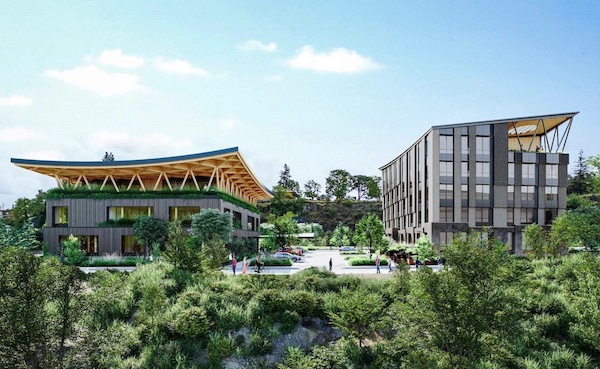 The first phase is designed to support a planned 55-unit residential building and a 12,000-square-foot commercial building on the former Blue Heron paper mill site. (Rendering: Grand Ronde Tribe)
The redevelopment is supported by a mix of tribal, federal, state and regional funding sources that have financed land acquisition, environmental cleanup, transportation infrastructure and future public access improvements.
Ryan Webb, the tribe’s engineering and planning manager, said the initial phase is expected to take just over a year.
“We anticipate by summer 2027 that that set of road and road network and the sidewalks and everything associated with that body of work will be done,” Webb said.
The site’s industrial past left behind contamination, aging structures and filled‑in waterways. When the tribe acquired the property, more than 50 buildings remained from decades of mill operations.
The tribe began demolition work and archeological studies at the site in 2021 as part of its redevelopment planning efforts. Webb said crews have demolished about 75% of those structures and removed hazardous materials as part of a broader environmental cleanup.
“A lot of the work will be related to healing, restoring of the shoreline of the land,” Webb said. “There were many areas on site where water used to come into the site. As the mills expanded, it filled a lot of those historical water channels in.”
The tribe plans to remove portions of that fill to reconnect the river to the land and reestablish natural channels. The work is paired with habitat restoration, native plantings and long‑term monitoring to address contamination in soil and groundwater.
The project’s funding has come together through multiple tribal, federal, state and regional sources. While the tribe declined to provide a complete funding breakdown, public records show the redevelopment has received support for land acquisition, environmental cleanup, transportation infrastructure and riverwalk development.
The Environmental Protection Agency awarded the tribe an $800,000 cleanup grant in 2021 under its Brownfields program. In September 2025, the tribe received a $12.5 million allocation from Oregon’s lottery fund, per a story by Smoke Signals. In February, Tribal Council approved an application for up to $9.9 million through the U.S. Department of Transportation's Better Utilizing Investments to Leverage Development, or BUILD, program. The application remains pending, with grant announcements for the program expected by June 28.
“We are really utilizing various different pots of funding, whether it’s grant funding or funding through our own tribal transportation program,” Webb said. “Through the partnerships we have with the state and federal government, we’ve been successful in getting funding that helps us drive our goals and deliver a project to the membership and the community as quickly as we can.”
As the infrastructure takes shape, the tribe is planning a mix of residential and commercial development. Current plans call for a 55-unit residential building and a 12,000-square-foot commercial building as part of the first development phase. Tribal planning documents have also contemplated additional mixed-use development, including retail, office and hospitality uses. The site is zoned for mixed use, giving the tribe flexibility as it moves through later phases.
Public access is a central part of the plan. The tribe intends to open the property to visitors through trails, viewing areas and connections to downtown Oregon City. Webb said the goal is to welcome both tribal members and the broader community back to a place that has been closed off for generations.
“Public access was the driver in allowing people back to the land to experience the river, to experience the falls,” Webb said.
The full redevelopment is expected to take at least a decade because of the scale of construction, cleanup and shoreline work. Tribal leaders say the long timeline reflects the complexity of rebuilding on a site shaped by both deep cultural history and heavy industrial use.
For the tribe, the project is an effort to restore a relationship with the falls while creating space for housing, business activity and community gathering. The first phase, now underway, sets the foundation for that work to continue.
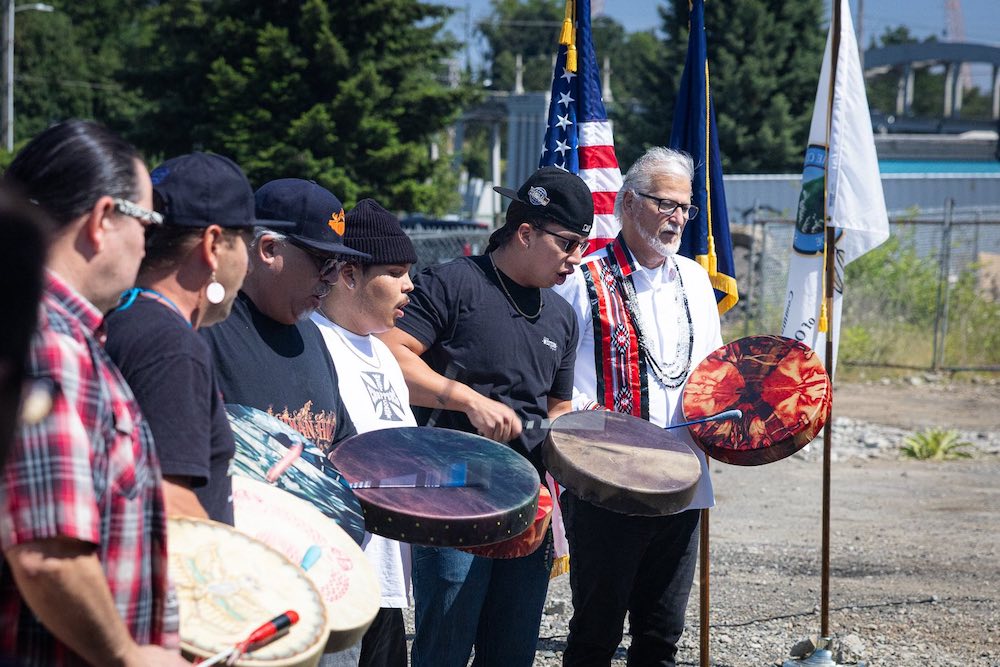
“I believe that the land cries out for our people to be there, to conduct ceremonies and to sing the songs, to hear the drum along with the thunder and roar of the falls,” Kennedy said. “That’s our goal.”
Brian Edwards contributed reporting.