


- Details
- By Ron Wood
- Opinion | Op-Ed
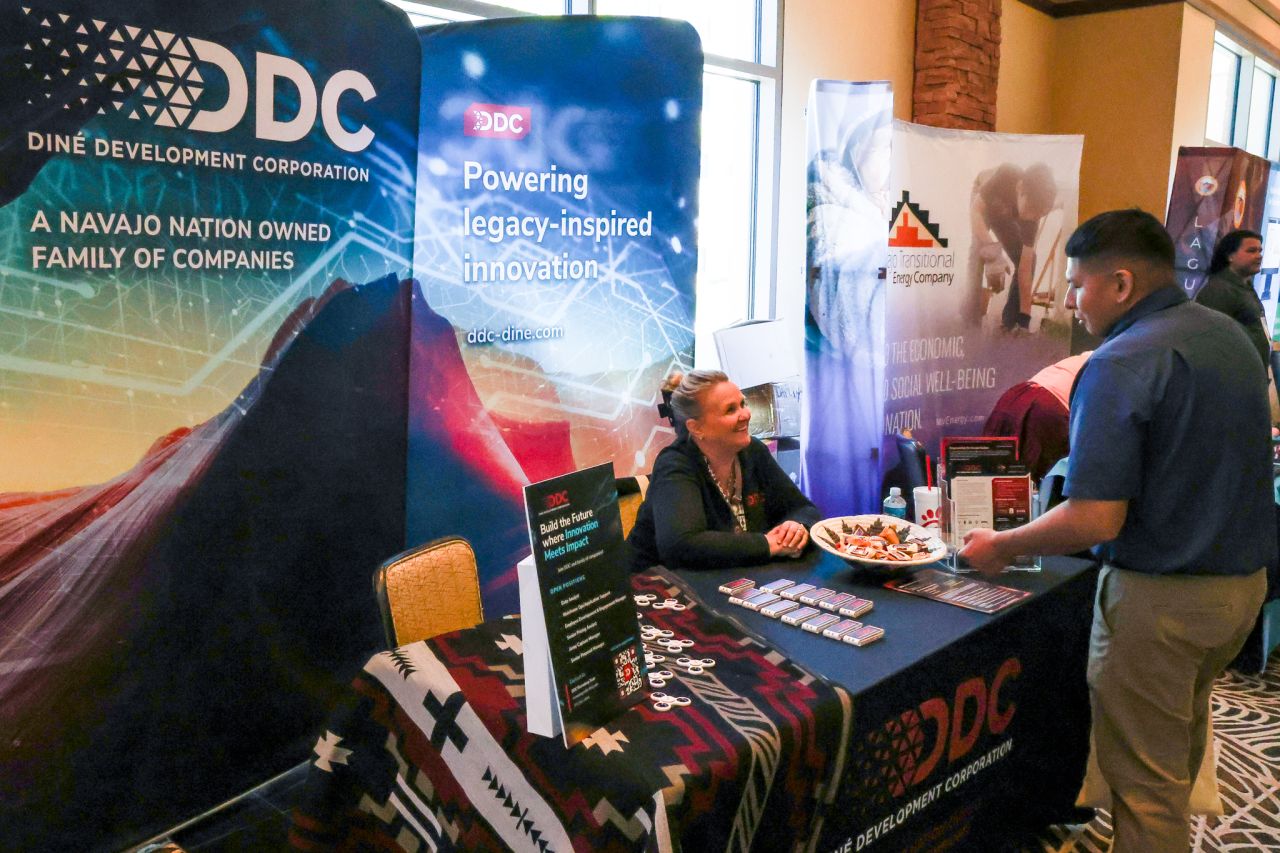
Guest opinion. Not long ago, Diné Development Corporation, a Navajo Nation-owned enterprise, was under such financial strain that making payroll wasn’t guaranteed. Today, it employs hundreds of people and competes in some of the most demanding areas of federal IT and cybersecurity contracting.
That transformation did not happen overnight. It happened because of hard work, expertise and persistence. But enabling all that dedication was the opportunity provided by the Small Business Administration’s 8(a) Business Development Program.
I saw this firsthand during my time on the board of DDC. When it was formed in the early 2000s, the goal was to create a tribally owned company that could compete in federal contracting and generate sustainable revenue for one of the poorest regions in the country. Native communities also face generations of underinvestment, geographic isolation and limited private-sector opportunity.
Entering federal IT and defense markets is extraordinarily difficult. Established corporations and household names in technology and defense dominate the field. For a startup, especially one owned by a tribal nation in a rural area with limited infrastructure, breaking into that market without assistance would have been nearly impossible.
The 8(a) program provided that opportunity.
It is also important to distinguish tribally owned enterprises from the caricature often invoked in these debates. When a tribally owned company succeeds in federal contracting, the benefits flow to tribal governments, economic diversification, workforce development and future Native-owned businesses. Unlike privately held firms, tribally owned enterprises reinvest earnings into public purposes rather than private shareholders.
When I joined the board, DDC relied heavily on a single contract and maintained a narrow IT focus. There were leadership changes and financial pressures, but we focused on delivering on our promises and serving our partners. Contracts were won because work was delivered and deals renewed because our customers were satisfied.
That is a critical point in today’s debate. Companies in the 8(a) program must perform. If they fail to deliver, agencies do not extend their contracts. There is no automatic entitlement to success. Performance, reputation and trust determine whether a company survives.
Over time, DDC has grown to hundreds of employees and developed multiple subsidiaries offering a range of IT and security services. That growth has produced measurable returns for the Navajo Nation. Publicly reported dividends and donations have totaled at least $5.4 million since 2017, including $700,000 contributions in both 2024 and 2025. Earlier distributions were often split between the Navajo Nation General Fund and business development initiatives, helping support both government services and broader economic growth. In a region where poverty remains widespread and private-sector investment is scarce, those dollars translate into real opportunity.
DDC has also contributed more than $24 million in community investments since 2004, underscoring the larger point that tribally owned enterprises can turn contracting revenue into long-term community benefit.
Critics of the 8(a) program make several arguments. Some have incorrectly folded the program into the broader political backlash against diversity, equity and inclusion initiatives. But tribal participation in federal contracting rests on a distinct legal and historical foundation, not on those initiatives. Others point to large sole-source awards, subcontracting concerns or allegations of fraud and abuse in parts of the system and ask whether oversight has kept pace. Those are legitimate questions for policymakers. But it is a mistake to leap from the importance of regular oversight and scrutiny to the conclusion that tribally owned enterprises are somehow undeserving of the opportunity to compete.
More broadly, while instances of fraud and abuse have occurred, they have not been unique to tribally owned firms, and oversight mechanisms already exist for sole-source awards. And while sole-source contracting receives outsized political attention, the overwhelming majority of sole-source federal contracting dollars flow to non-8(a) firms, not tribally owned enterprises. The larger point is that the SBA 8(a) program expands competition in industries often dominated by a small number of entrenched incumbents. Tribal participation in that system is not based on a diversity initiative or political preference but on the longstanding legal and trust relationship between the United States and Tribal Nations, a framework intended to help Native communities build sustainable economic capacity through successful participation in the broader economy.
The 8(a) program does not guarantee success. It simply provides us with a chance to compete.
This matters both for Native communities and the federal marketplace. Smaller and emerging firms often bring flexibility, specialized expertise and innovation to fields like cybersecurity and IT services. A marketplace dominated by only a handful of giant incumbents is not always the most competitive or resilient one. If policymakers are concerned about accountability, the answer is not to weaken or eliminate the program. The answer is to enforce rigorous oversight, demand clear performance standards, investigate fraud wherever it occurs, and distinguish between bad actors and enterprises that are complying with the rules and delivering results. Reform should be targeted and evidence-based, not ideological or indiscriminate.
As a veteran, former federal employee and member of the Navajo Nation, I have seen what opportunity can do. I have seen a company on the brink of uncertainty grow into a stable enterprise employing hundreds. And I have seen that success return real value to the Navajo Nation through recurring dividends, donations and business development support.
The question before policymakers is straightforward. Do we want an economy where only the largest players can compete, or one where new entrants with talent and determination have a genuine chance?
Every American benefits when more communities have the opportunity to contribute to the nation’s economy. A healthy economy depends on drawing talent and enterprise from all parts of the country and all communities, not just from firms that already dominate federal contracting.
The 8(a) program opens the door. It does not promise success, but it makes success possible.
Ron Wood, a member of the Navajo Nation, is a former chairman of the board of Diné Development Corporation and former executive officer of the Navajo Area Indian Health Service. A U.S. Army Vietnam veteran, he lives in Fort Defiance, Ariz., and works on local economic development efforts.